








Sometimes improving your wellbeing doesn't begin with changing everything about your lifestyle.
It begins with understanding more.
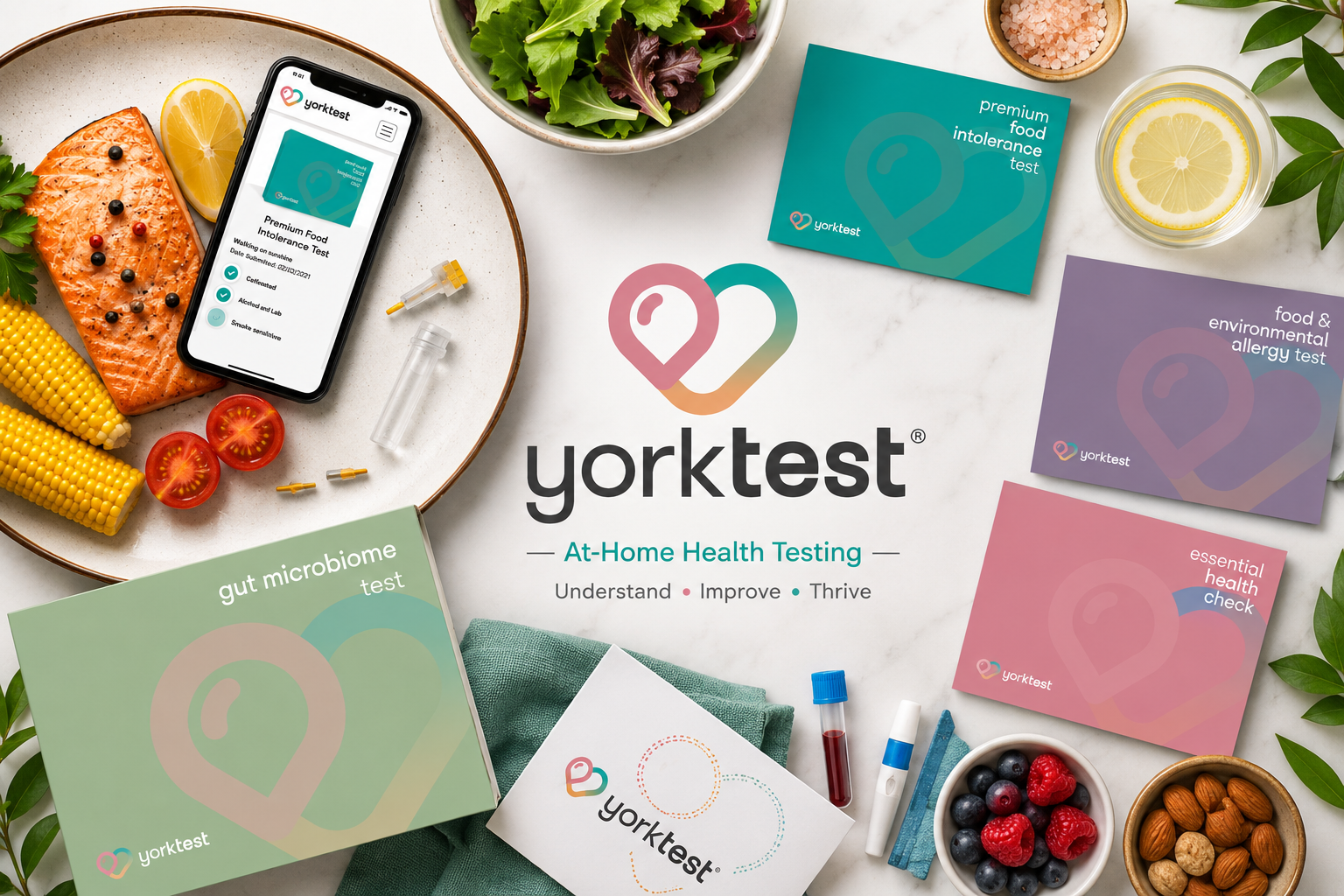
That idea sits at the heart of YorkTest, a UK health and wellness company specialising in home-to-laboratory testing for food intolerance, allergies and other health markers.
Founded in 1982, YorkTest has spent more than four decades developing its testing services and helping customers gain more insight into nutrition, food reactions and overall wellbeing.
What makes the brand particularly interesting is its approach to convenience: instead of requiring every customer to visit a testing facility, YorkTest sends a testing kit directly to the customer's home, allowing a sample to be collected and returned to its laboratory for analysis.
It is essentially a bridge between at-home convenience and laboratory testing.
The Story Behind YorkTest
YorkTest's story began in 1982 at the University of York.
What started in an academic environment developed into decades of work surrounding food intolerance and health testing. The company says its scientific journey has included research into food-specific IgG testing and elimination diets, including a 2007 study developed with the University of York.
Over time, YorkTest expanded its offering beyond food intolerance testing.
Today, its range includes:
- Food intolerance testing
- Food allergy testing
- Gut microbiome testing
- General health checks
- Children's testing
- Family and couples testing programmes
- Nutritional support
This makes YorkTest more than a single-test company. It has developed into a broader home health-testing platform.
What Makes the YorkTest Approach Different?
The concept is relatively simple.
You order a test.
The kit arrives at your home.
You collect your sample.
You send it back to the laboratory.
Then you receive your results.
But behind that simple customer experience is a laboratory-based testing process.
YorkTest says its samples are handled by trained and qualified scientists, with testing performed through its own laboratory for food intolerance and allergy services. Samples are also anonymised with unique reference numbers throughout the testing process.
That combination of home convenience + laboratory analysis is one of the central ideas behind the brand.

How Does a YorkTest Home Test Work?
The process is designed to be straightforward.
1. Order Your Test
Customers select the test or programme that matches what they want to investigate.
2. Receive the Kit
The testing kit is delivered to the customer's home with the materials required to collect the sample.
3. Collect a Sample
For the relevant blood-based tests, customers use a small finger-prick lancet to collect a blood sample at home.
4. Return the Sample
The sample is placed into the provided packaging and returned to the laboratory using the supplied return process.
5. Receive Your Results
YorkTest says many of its testing programmes provide results within approximately seven days after the sample has been received and processed.
The entire experience is therefore designed around removing one of the biggest barriers to testing:
convenience.
Food Intolerance Testing: One of YorkTest's Best-Known Services
Food intolerance is one of the areas most strongly associated with YorkTest.
Its current Premium Food Intolerance Test analyses reactivity to 200 food and drink ingredients using food-specific IgG measurements.
The results are presented in an easy-to-read format, including traffic-light style categories indicating different levels of reactivity.
Customers can then use this information alongside dietary tracking and nutritional guidance.
However, there is an important distinction to understand.
YorkTest itself states that its food-intolerance testing is not designed to provide a formal medical diagnosis and that food-specific IgG results should not be used to diagnose, treat or cure a specific food intolerance.
That distinction matters.
The test is better understood as a tool that can provide information to support an elimination-diet approach rather than a replacement for professional medical diagnosis.
Food Allergy and Food Intolerance Are Not the Same
This is one of the most important things consumers should understand before choosing a test.
Food allergy and food intolerance are different concepts.
YorkTest offers a separate Food Allergy Test that measures IgE reactions to 23 foods and 19 environmental allergens.
Its food-intolerance programmes, meanwhile, measure food-specific IgG antibodies.
The company also clearly states that its food-intolerance tests do not test for conditions such as:
- Coeliac disease
- Lactose intolerance caused by enzyme deficiency
- Histamine sensitivity
- All food allergies
- Other chemical sensitivities
This distinction makes it particularly important for customers to choose the appropriate test rather than assuming every food-related problem is the same.

One of YorkTest's newer directions is gut microbiome testing.
The gut microbiome is made up of communities of microorganisms living within the digestive system, and YorkTest's Gut Microbiome Test uses DNA sequencing technology to analyse microorganisms in a stool sample.
The resulting report is designed to provide insights into areas such as:
- Microbial diversity
- Balance of beneficial and potentially harmful bacteria
- Digestive function
- Gut-related patterns
- Overall microbiome composition
This represents a shift from simply asking:
“Which foods might I react to?”
towards a broader question:
“What is happening inside my gut?”
That makes microbiome testing an interesting extension of YorkTest's original food-focused approach.
The Human Side of Testing
Laboratory results are useful, but understanding what to do with them can be just as important.
YorkTest places considerable emphasis on support after testing.
For its relevant food and drink-specific IgG testing, the company offers access to nutritional therapist consultations where customers can discuss their results, diet and possible dietary changes.
This creates a three-part model:
Test → Understand → Take Action
Instead of simply receiving a report and being left to interpret it alone, customers can receive additional nutritional guidance.
That support is particularly valuable when dietary changes are involved.
Why At-Home Testing Is Becoming More Appealing
The popularity of at-home health testing reflects a wider change in consumer behaviour.
People increasingly want:
- Convenience
- Privacy
- Easy access
- Faster information
- Digital results
- Personalised insights
YorkTest's model responds directly to these expectations.
The customer doesn't necessarily need to rearrange their day around an appointment. The initial sample collection can take place in familiar surroundings, and the laboratory work happens after the sample is returned.
It makes the process feel less intimidating.
And for people who are uncomfortable with traditional clinical environments, that can be an important advantage.
YorkTest's Focus on Scientific Testing
The company places considerable emphasis on laboratory quality and scientific expertise.
YorkTest says its laboratory is ISO 13485 audited and certified, and that its testing processes involve trained scientists and quality controls.
The company also states that its laboratory has achieved a greater than 98% reproducibility rate for its food-intolerance testing, meaning repeated tests using the same person's sample on the same day showed more than 98% correlation in its assessment.
It's worth noting that reproducibility is not the same thing as proving that a test can diagnose a medical condition.
For consumers, understanding that difference is important when evaluating health-testing services.
Who Might Be Interested in YorkTest?
YorkTest's services can appeal to several different types of customers.
People Exploring Food Reactions
Someone who notices recurring symptoms after eating certain foods may want more information to discuss with a healthcare professional or use as part of a dietary strategy.
People Interested in Nutrition
Health-conscious consumers may simply want to understand more about their relationship with food and nutrition.
Gut Health Enthusiasts
People interested in microbiome science may find the gut microbiome test particularly relevant.
Families
YorkTest offers specific testing options for children and family groups, expanding its services beyond individual testing.
People Who Prefer Home Testing
For anyone who values convenience and privacy, the home-to-laboratory model can be particularly attractive.
What Makes YorkTest Stand Out?
There are now many companies offering home health tests.
YorkTest's differentiation comes from combining several elements:
More than 40 years of experience
The company traces its history back to 1982.
Home-to-laboratory testing
Customers collect samples at home before sending them for laboratory analysis.
Multiple testing categories
The portfolio extends from food intolerance and allergies to general health and gut microbiome testing.
Nutritional support
Relevant customers can receive additional guidance following their results.
Laboratory focus
YorkTest places strong emphasis on scientific processes, laboratory quality and qualified personnel.
Together, these elements create a brand positioned between consumer wellness and laboratory testing.

The Bigger Picture: Understanding Your Health
Perhaps the most interesting part of YorkTest isn't any individual test.
It's the broader idea behind the brand.
Modern wellness is increasingly moving away from generic advice.
Instead of simply saying:
“Eat healthy.”
people want to know:
“What does healthy mean for me?”
Instead of:
“Look after your gut.”
they ask:
“What can I learn about my gut?”
And instead of completely eliminating foods based on internet trends, consumers increasingly want some form of structured information to guide their decisions.
YorkTest has built its business around that desire for personalised information.
Final Verdict: Is YorkTest Worth Knowing About?
YorkTest is an interesting example of how health testing is becoming more accessible to consumers.
With roots dating back to 1982, the brand has developed from its early focus on food intolerance into a wider portfolio covering allergies, health checks and gut microbiome analysis.
Its biggest appeal is arguably the combination of:
Home convenience + laboratory analysis + personalised support.
At the same time, consumers should understand exactly what each test measures and what it does not diagnose. YorkTest itself makes this distinction particularly clear for its food-specific IgG testing.
Ultimately, YorkTest isn't about providing a magic answer to every health question.
It's about giving people more information.
And when that information is interpreted responsibly and alongside appropriate professional medical advice, it can become another useful part of a person's approach to understanding their nutrition and wellbeing.