








30% Off - Sitewide | Exclusive
25% Off - All Denims
20% Off - Jackets
18% Off - All Orders
Free Shipping Your Orders
10% Off - Your Order
15% Off - Sign Up Offer
LOLA DENIM Review: Is It Worth It in 2026?
Introduction
Finding a pair of jeans that actually feels good, looks current, holds its shape, and works with more than two outfits is surprisingly difficult. We have all had that pair that looks amazing for the first hour and then starts feeling uncomfortable. Or the jeans that fit perfectly in the waist but somehow don't work anywhere else.
That is part of the reason LOLA DENIM caught my attention.
The Montreal-based denim brand has been around since 2006 and has built its identity around women's denim with a strong focus on fit, contemporary silhouettes, craftsmanship, and sustainability. The brand says it redesigned its approach in 2020, moving toward a more conscious model that uses low-impact fabrics, ozone washes and laser finishing techniques. It also says these production methods can reduce water use by around 80%.
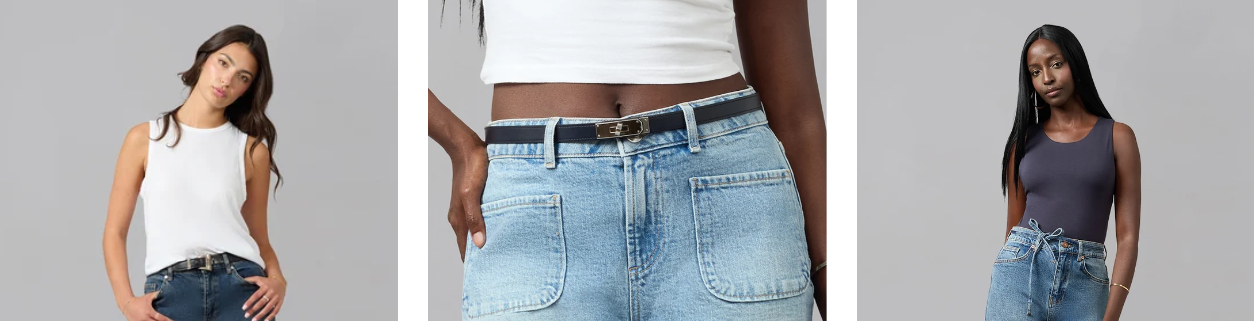
What makes LOLA DENIM interesting in 2026 is that sustainability isn't the only selling point. The current collection includes wide-leg jeans, barrel jeans, bootcuts, flares, straight-leg styles, skirts, shorts, denim jackets, vests and matching pieces.
And honestly, the collection feels very wearable. There is plenty of that relaxed '90s influence that has become popular again, but the brand doesn't completely abandon classic cuts.
So, is LOLA DENIM actually worth the investment? I took a closer look at the designs, materials, fit philosophy, sustainability claims, pricing and reputation to find out.
Quick Verdict Table
| Category | Rating |
|---|---|
| Design | 9.2/10 |
| Denim Quality | 9.1/10 |
| Fit & Silhouettes | 9.3/10 |
| Sustainability | 9.4/10 |
| Comfort | 8.9/10 |
| Everyday Wear | 9.0/10 |
| Collection Variety | 9.1/10 |
| Price-Value | 8.5/10 |
| Size Range | 8.5/10 |
| Brand Identity | 9.3/10 |
| Overall | 9.0/10 |
My quick take: LOLA DENIM is a strong choice if you want premium-looking women's jeans with modern silhouettes and a genuine sustainability focus. The biggest consideration is price: these aren't bargain jeans, so the fit needs to be right before you commit.
What Is LOLA DENIM?
LOLA DENIM is a Montreal-founded women's denim brand established in 2006 by founder David Abissidan. What began as a small denim business developed into a brand focused on premium women's jeans and contemporary wardrobe pieces.
The brand describes its philosophy around three major ideas: style, quality and responsible production.
The current assortment makes that very clear. Jeans remain the center of the collection, but LOLA DENIM also offers denim skirts, shorts, jackets, vests, tops and trousers. Current jean styles include names such as Colette, Milan, Miro, Dylan, Billie, Alice and Denver.
The brand also positions itself as a sustainable denim company. Its official sustainability information says the company uses low-impact fabrics, ozone washes and laser finishes, while its production partners are expected to follow its code of conduct.
One detail I particularly appreciate is that LOLA doesn't pretend sustainability is perfect. Its own code of conduct acknowledges that the company is continually learning and improving rather than presenting sustainability as a finished achievement.
That feels more realistic than treating one recycled material or one eco-friendly wash as the entire story.
Why Is LOLA DENIM Popular?
Modern fits without abandoning classic denim
The biggest attraction is probably the range of silhouettes.
Wide-leg jeans, straight legs, bootcuts, flares and barrel jeans are all represented in the current range.
That matters because denim trends change quickly. Skinny jeans may dominate one year, while relaxed or wide-leg styles suddenly become the obvious choice the next.
LOLA DENIM has enough variety to follow those changes without building the entire brand around one trend.
Strong '90s influence
The brand's current aesthetic has a noticeable vintage-meets-modern feel. Its own site highlights grungy '90s-inspired cuts alongside contemporary cargo-inspired shapes.
This is one of those trends I think works particularly well with denim because it doesn't feel overly complicated. Throw on a simple tee, sneakers and a denim jacket, and the jeans can do most of the styling work.
Sustainability is part of the production process
LOLA DENIM says its jeans are made using lower-impact fabrics and techniques such as ozone washing and laser finishing. According to the brand, these methods contribute to approximately 80% less water use.
Its code of conduct also states that the jeans are produced in Istanbul at a factory that the company describes as having a strong reputation for quality and workers' rights. LOLA says its team visits the factory during sampling and production and uses third-party auditors to trace its supply chain.
That's a much more interesting sustainability story than simply putting the word "eco" on a product page.
Premium positioning
LOLA DENIM isn't competing directly with fast-fashion pricing.
The official U.S. collection currently lists many jeans around the $140–$150 range, while certain new or specific styles can reach $160–$180.
So you're paying for a more premium denim proposition.
Product/Service Categories Overview
| Category | Examples | Overall Impression |
|---|---|---|
| Wide-leg jeans | Colette, Milan | Trendy and versatile |
| Straight jeans | Denver, Miro | Easy everyday options |
| Barrel jeans | Dylan, Lennox | Fashion-forward |
| Bootcut jeans | Billie | Classic with a modern update |
| Flare jeans | Alice | Retro-inspired |
| Shorts | Liana | Casual summer styling |
| Skirts | Halston, Maddy | Easy denim alternatives |
| Denim jackets | Gabriella, Sabrina | Wardrobe staples |
| Denim vests | Gabbie, Carter, Emma | Layering pieces |
| Tops & trousers | Liel, Remy | Useful additions |
The assortment available through retailers also shows that LOLA DENIM has moved beyond jeans into a broader contemporary wardrobe. Nordstrom currently lists dozens of pieces across jeans, skirts, shorts, jackets, vests, tops and trousers.
Key Features and Benefits
1. A strong selection of silhouettes
If you don't know whether straight, wide-leg, bootcut or barrel jeans suit you best, LOLA DENIM gives you plenty of room to experiment.
The Miro is positioned as a mid-rise comfort straight jean, while Denver is a high-rise straight style. Billie offers a high-rise bootcut, Alice a high-rise flare, Milan an ultra-high-rise wide leg and Dylan a high-rise barrel silhouette.
That is a useful range rather than simply changing washes on the same cut.
2. Sustainable finishing techniques
The use of ozone washing and laser finishing is one of LOLA's strongest technical selling points. These processes are designed to reduce resource consumption compared with more conventional denim finishing methods.
3. Responsible manufacturing policies
LOLA DENIM's code of conduct covers suppliers, manufacturers, factories and other partners. The company also says subcontracting isn't permitted without prior approval and adherence to its standards.
That doesn't make the supply chain automatically perfect, but it shows there are defined policies behind the sustainability messaging.
4. Sizes designed around women's denim
The official U.S. jeans collection states that LOLA DENIM offers women's styles in sizes 24–42.
That provides a useful range, although I would still like to see broader sizing across every individual style.
5. Easy wardrobe integration
Despite the trend-driven silhouettes, most LOLA DENIM pieces are surprisingly easy to style.
A wide-leg jean works with a fitted tank and sneakers. A bootcut works with boots and a blazer. Straight jeans can go almost anywhere.
This makes the brand more practical than a collection built entirely around statement pieces.
My First Impressions of LOLA DENIM
My first impression is that LOLA DENIM knows exactly what it wants to be.
It doesn't have the feeling of a huge generic fashion retailer where denim is just another category. The collection feels much more focused.
I also like the balance between trend and longevity. The wide-leg and barrel shapes feel current, but the straight, bootcut and flare options keep the collection grounded.
If I were scrolling through the collection looking for one pair to start with, I'd probably begin with a straight or relaxed style rather than immediately choosing the most dramatic silhouette.
Why? Because the real test of premium denim is cost-per-wear.
A pair that works with sneakers, loafers, boots, sweaters, tees and jackets is going to earn its place in your wardrobe much faster than something you can only style one way.
The other thing I noticed is that the sustainability story feels integrated into the production process rather than used purely as a marketing headline. That's an important distinction for me.
Product Quality and Performance Analysis
Denim feel and construction
LOLA DENIM positions its jeans in the premium segment, and the overall product presentation supports that positioning.
The current retailer listings show many styles priced around $140–$160 at full retail, with selected pieces reaching $180.
At this level, I would expect clean construction, dependable hardware, consistent stitching and denim that retains its shape reasonably well.
The brand's emphasis on craftsmanship and its Istanbul manufacturing relationships are encouraging here. LOLA says its team visits the factory during sampling and production, while third-party auditors are used for supply-chain tracing.
Fit and comfort
Fit is where denim becomes personal.
The current collection has high-rise, ultra-high-rise and mid-rise options, plus several leg shapes.
I actually see this as a strength because different body shapes need different proportions.
If you prefer a little more room through the leg, the wide-leg and barrel options make sense. If you want something more familiar, the straight or bootcut styles are easier starting points.
The important thing is to check the individual product measurements rather than assuming your usual jeans size will work across every silhouette.
Shape retention
A good pair of jeans shouldn't look completely different after a few wears.
This is difficult to judge universally because fabric composition varies by style, but LOLA's focus on premium denim and structured silhouettes suggests that shape retention is an important part of the design approach.
I'd be particularly interested in how the stretchier styles behave over long-term wear, because that's where many jeans start to lose their original fit.
Sustainability performance
This is probably the category where LOLA DENIM stands out most.
The company says its production methods use substantially less water and include ozone washing and laser finishing. It also emphasizes responsible materials and factory oversight.
I wouldn't treat the brand's sustainability claims as proof that every environmental impact has disappeared. Denim production still requires cotton, energy, transportation and manufacturing resources.
But compared with brands that barely discuss how their denim is produced, LOLA offers considerably more transparency about its intended approach.
Detailed Ratings Table
| Category | Rating |
|---|---|
| Denim quality | 9.1/10 |
| Fit variety | 9.3/10 |
| Comfort | 8.9/10 |
| Design | 9.2/10 |
| Sustainability | 9.4/10 |
| Construction | 9.0/10 |
| Versatility | 9.1/10 |
| Collection variety | 9.1/10 |
| Price-to-quality ratio | 8.5/10 |
| Brand identity | 9.3/10 |
| Overall | 9.0/10 |
Pros and Cons
Pros
| Advantage | Why It Matters |
|---|---|
| Strong denim selection | Multiple cuts for different preferences |
| Modern silhouettes | Wide-leg, barrel, flare and bootcut options |
| Sustainability focus | Low-impact finishing and responsible production policies |
| Premium positioning | Designed around quality rather than fast-fashion pricing |
| Versatile styling | Most cuts work across casual and dressed-up outfits |
| Distinct brand identity | Easy to recognize and not overly generic |
| Broader clothing range | Jackets, skirts, vests and tops complement the jeans |
Cons
| Drawback | What to Consider |
|---|---|
| Premium pricing | Many full-price jeans cost around $140–$160 |
| Fit can be personal | Different rises and cuts may require different sizes |
| Limited size range compared with some competitors | Official jeans range is listed as 24–42 |
| Sustainability isn't impact-free | Responsible production doesn't eliminate every environmental cost |
| Less suitable for ultra-budget shoppers | Better compared with premium denim than discount jeans |
Performance Score Chart
Sustainability ███████████████████░ 9.4/10 Fit Variety ███████████████████░ 9.3/10 Brand Identity ██████████████████░░ 9.3/10 Design ██████████████████░░ 9.2/10 Denim Quality ██████████████████░░ 9.1/10 Versatility ██████████████████░░ 9.1/10 Collection Variety ██████████████████░░ 9.1/10 Construction ██████████████████░░ 9.0/10 Comfort █████████████████░░░ 8.9/10 Price-Value █████████████████░░░ 8.5/10
Customer Reviews and Reputation
LOLA DENIM has a relatively different review situation from huge mainstream denim brands. There isn't the same volume of independent consumer feedback that you might find for Levi's or other global labels.
However, retailer feedback provides some useful signals.
Nordstrom currently lists individual Lola Denim products with customer ratings. For example, the Colette High Rise Wide Leg Jeans are shown with a five-star rating from one review, while some Miro, Billie and Gabriella listings also display individual customer feedback.
That sample is far too small to call it statistically representative, so I wouldn't use those ratings as proof that every LOLA style will fit perfectly.
What is more consistent is the brand's retail presence. LOLA DENIM products are sold through its own channels and established retailers such as Nordstrom, giving shoppers additional ways to discover and compare the collection.
The brand's own sustainability and production documentation is also unusually detailed. LOLA describes its Istanbul manufacturing setup, factory visits, third-party auditing and supplier code of conduct.
For me, that adds credibility to the brand's responsible-production positioning, although no company should be treated as environmentally perfect simply because it publishes sustainability policies.
Who Should Buy LOLA DENIM?
If you want premium everyday jeans
This is probably the most obvious audience.
If you're willing to spend more on denim and want something beyond fast-fashion basics, LOLA DENIM makes sense.
If you love wide-leg and relaxed fits
The current collection is particularly strong in contemporary relaxed silhouettes, including wide-leg and barrel shapes.
If sustainability matters to your shopping decisions
LOLA's production approach makes it worth considering if you want to reduce the impact of your clothing purchases while still buying new denim.
If you like building capsule wardrobes
The straightforward styles are easy to combine. One good pair of straight jeans, one wide-leg pair and a denim jacket could cover a surprising number of outfits.
Who might skip it?
If your priority is simply getting jeans for the lowest possible price, LOLA probably isn't the right place to start.
Likewise, if you need a very extensive size range beyond 24–42, the available selection may feel limiting depending on the style.
Comparison With Competitors
| Brand | Main Strength | Style Direction | Price Position | Sustainability Focus |
|---|---|---|---|---|
| LOLA DENIM | Premium women's denim | Modern, relaxed, '90s-inspired | Premium | Strong |
| Levi's | Denim heritage | Huge range of classics and trends | Mid to premium | Moderate/varies by product |
| AG Jeans | Premium denim | Refined contemporary | Premium | Strong |
| Madewell | Everyday wardrobe | Casual, classic, modern | Mid to premium | Moderate |
| Frame | Fashion-led denim | High-fashion contemporary | Premium/luxury | Varies |
The biggest difference with LOLA DENIM is its combination of modern silhouettes and a clearly communicated sustainability strategy.
Levi's has the stronger heritage and enormous global selection. Frame leans more fashion-forward and premium. Madewell is particularly strong for everyday wardrobe basics. AG Jeans occupies a similarly premium denim space.
LOLA sits comfortably among these brands while maintaining a distinctly Montreal-rooted identity.
8 Frequently Asked Questions
1. Is LOLA DENIM a good brand?
LOLA DENIM offers premium women's denim with a broad selection of modern silhouettes and a strong focus on responsible manufacturing. Its current collection includes straight, wide-leg, flare, bootcut and barrel styles.
2. Where is LOLA DENIM from?
LOLA DENIM was founded in Montreal in 2006 by David Abissidan.
3. Where are LOLA DENIM jeans made?
The company says its jeans are made in Istanbul, Turkey, at a factory it describes as having a strong reputation for quality and worker rights.
4. Is LOLA DENIM sustainable?
LOLA DENIM has built sustainability into its production approach, including low-impact fabrics, ozone washing, laser finishing and supply-chain policies. The company says these methods can reduce water use by around 80%.
5. What sizes does LOLA DENIM offer?
The official U.S. jeans collection currently states that women's jeans are offered in sizes 24–42. Individual styles and availability can vary.
6. How much do LOLA DENIM jeans cost?
Current full-price styles commonly sit around $140–$160, with certain models priced at $180. Sale pricing can be lower depending on the retailer and season.
7. What are the most popular LOLA DENIM styles?
The current assortment includes several notable silhouettes such as Colette wide-leg, Milan ultra-high-rise wide-leg, Miro comfort straight, Denver straight, Billie bootcut, Alice flare and Dylan barrel jeans.
8. Is LOLA DENIM worth it in 2026?
For shoppers who prioritize premium denim, contemporary fits and responsible production, I think LOLA DENIM deserves serious consideration. The price is higher than budget denim, so the value depends heavily on finding a fit you genuinely love.
Final Verdict
After looking closely at LOLA DENIM, I can see why the brand is gaining attention.
The biggest strength isn't one particular pair of jeans. It's the overall approach.
You get contemporary cuts without the collection becoming completely trend-dependent. You get a strong sustainability story without the brand pretending that fashion can somehow have zero environmental impact. And you get a product range that goes beyond jeans while keeping denim at the center.
The Colette, Milan, Miro, Denver, Billie, Alice and Dylan styles demonstrate just how varied the current denim offering is. Whether you prefer a relaxed wide leg, a structured straight fit, a bootcut or a more fashion-forward barrel shape, there is plenty to explore.
The sustainability side is also worth highlighting. LOLA says it uses low-impact fabrics, ozone washes and laser finishing, and reports approximately 80% less water use. Its supplier code and factory oversight add another layer to the company's responsible-production strategy.
The main drawback is straightforward: price.
At roughly $140–$160 for many full-price jeans, LOLA DENIM isn't an impulse purchase for most people.
But if you find a silhouette that fits beautifully and expect to wear it regularly, the calculation changes. A pair of jeans that becomes one of those reliable pieces you reach for every week can justify a higher upfront cost much more easily than a cheaper pair that stays in the back of the closet.
My personal recommendation would be to start with a versatile silhouette rather than the most dramatic trend. A straight, bootcut or relaxed wide-leg pair is easier to build outfits around. Once you know how LOLA DENIM fits you, then it becomes much more fun to experiment with barrel and flare styles.
Final rating: 9.0/10.
So, is LOLA DENIM worth it in 2026? For the right shopper, absolutely. It's particularly appealing if you want modern women's denim, care about how your clothes are produced, and are comfortable paying a premium for a more considered product. It isn't the cheapest denim brand around, but its combination of fit variety, contemporary design, quality positioning and sustainability efforts gives it a strong place in the premium denim market.